
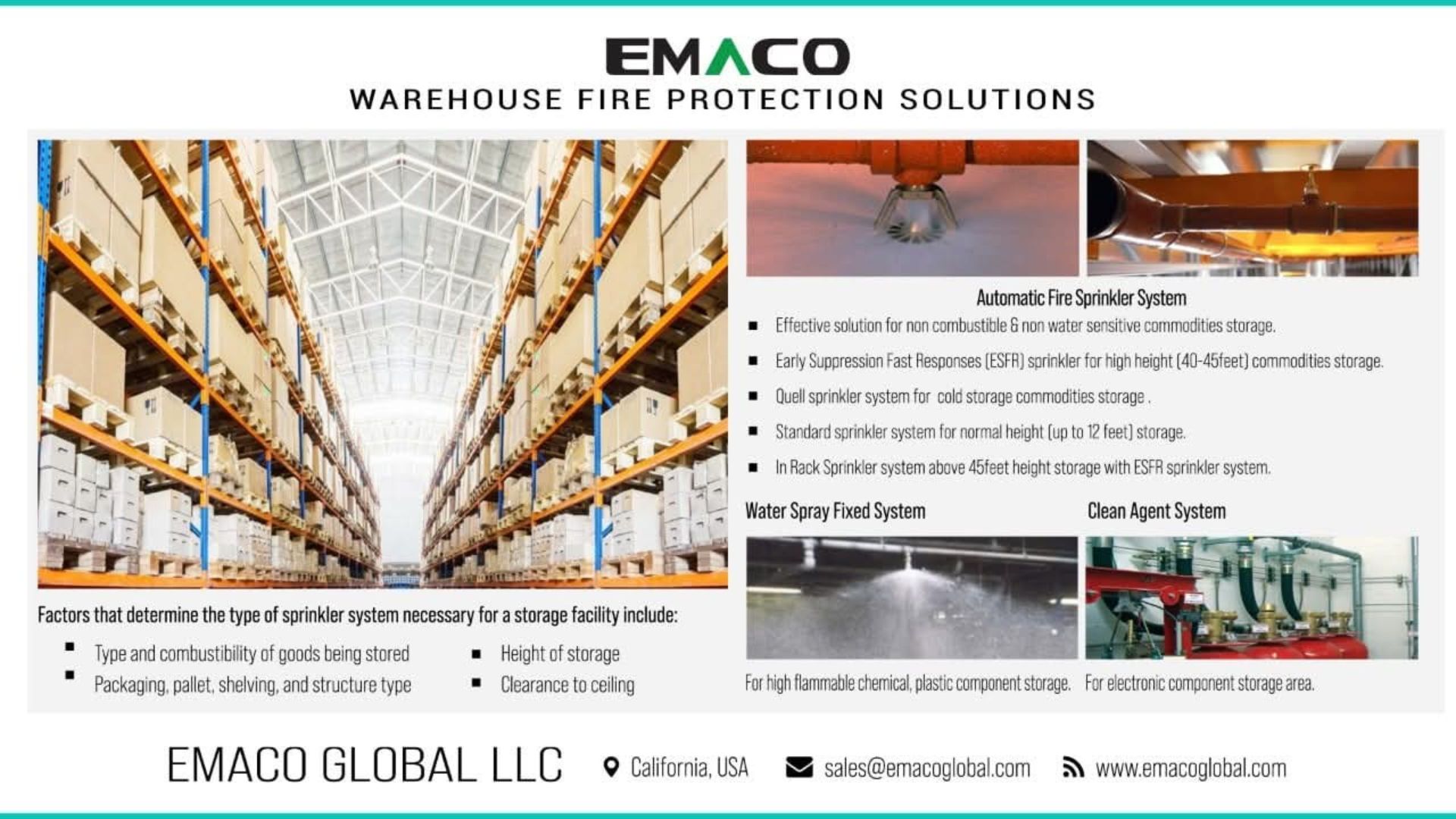
Warehouses face elevated fire risks due to the large volumes of stored goods and often complex layouts. From 2014 to 2018, U.S. fire departments responded to an average of 1,410 warehouse fires per year—about three to four each day. Modern fire protection systems, particularly automatic sprinklers, have significantly reduced losses. According to the NFPA, “thanks to the invention of sprinkler systems, most warehouse fires are put out safely,” making them one of the most effective tools for reducing damage and saving lives.
However, for large or high-risk facilities, sprinklers alone may not suffice. Fire hydrant systems provide a critical secondary defense, ensuring a robust water supply and enhanced firefighter access across expansive warehouse spaces.
This article emphasizes the significance of fire hydrant systems in warehouse fire protection, their role in conjunction with other suppression technologies, and key considerations for their design, installation, and maintenance.
Why Fire Hydrant Systems Are Essential in Warehouses
Warehouses often span tens of thousands of square feet and house high-value inventory or hazardous materials. A fire hydrant system is a network of pipes, valves, hoses, and hydrants that delivers large volumes of water to fire areas. Here’s why such a system is critical in a warehouse setting:
- Extended Water Supply: Unlike sprinklers alone, hydrant systems connect to high-capacity water pumps and tanks (often with a jockey pump for pressure maintenance). This ensures an ample water reservoir is available even if the municipal supply is limited or a fire overwhelms a single sprinkler riser.
- Firefighter Access: Hydrants (and standpipes) enable firefighters to directly tap into the warehouse’s system. They can connect hoses to hydrant outlets inside or outside the building. This is vital if the blaze is large, in hard-to-reach areas, or if sprinklers cannot contain it.
- Coverage of Large Areas: Warehouse layouts can impede fire suppression. NFPA standards (e.g., NFPA 14 for standpipes) require hydrants and risers at certain intervals so hoses can reach any point in the building. As OSHA notes, hydrant spacing—mandated by fire codes- determines how much hose is needed and whether pumpers can quickly reach the fire. Proper placement near intersections or stairwells ensures no part of the warehouse is out of reach.
- High-Capacity Flow Rates: A warehouse fire may require much higher flow than standard sprinkler systems. Hydrant nozzles can provide large-diameter flows (often 4½ inches or more) at high pressure, supporting multiple hose lines or foam additives if needed.
- Building Code Compliance: Many building codes or insurance requirements mandate hydrant/standpipe systems in large or high-piled storage facilities. Ensuring a compliant hydrant system can be legally required.
In short, a fire hydrant system acts as the backbone of a warehouse fire protection strategy. While sprinklers attack the fire with overhead water discharge, hydrants supply the water and access needed for total protection. Without it, firefighters may struggle to get enough water to the seat of a fire.
Automatic Fire Sprinkler System vs. Fire Hydrant System
Both automatic fire sprinkler systems and fire hydrant systems are crucial, but they serve different roles:
- Sprinkler Systems (Automatic Fire Sprinkler System): Activated by heat, sprinklers spray water (or foam) over localized areas. They often respond quickly to incipient fires, controlling or extinguishing them in seconds to minutes. Sprinklers are automatic and can operate even without human intervention, covering ceilings and rack storage (including in-rack sprinklers for high-piled storage).
- Hydrant Systems: These are manual in the sense that firefighters use hoses to direct water. Hydrants don’t automatically suppress the fire; instead, they provide the means and water supply to fight larger fires.
Key Differences and Synergy: Sprinklers vs. Hydrants in Warehouse Fire Protection
| Aspect | Sprinkler Systems | Hydrant Systems |
| Water Delivery | Distributes water in a fine spray across a wide area | Delivers high-volume, raw water flow through hoses |
| Effectiveness in Fire | May struggle to penetrate dense or high-rack storage | Allows firefighters to directly target the fire with hose streams |
| Response Phase | Primarily for early-stage fire suppression | Used in sustained fire attack, exposure protection, and backup support |
| System Types | Includes wet-pipe, dry-pipe, pre-action, and deluge systems | Includes Class I standpipes (2½″ outlets) with hydrants or hose cabinets |
| User Access | Fully automatic—activates upon heat detection | Operated by firefighters or trained personnel during emergency response |
| Integration | Often integrated with fire alarm and detection systems | Typically connected to dedicated water supplies and accessible throughout facility |
## In practice, a warehouse with a robust fire protection plan will have both systems in place. This ensures redundancy: if sprinklers underperform, hydrants back them up. It also means water can flow through multiple paths, sharing the load.
Components of a Fire Hydrant System
A typical warehouse fire hydrant system includes the following components:
- Water Source / Tank: A dedicated fire pump may draw from a large on-site reservoir or tank. This tank (gravity or pressure type) ensures water is available even if the municipal supply fails.
- Fire Pump Sets: A main pump (often UL/FM approved) provides the necessary pressure/flow. A jockey pump maintains system pressure to avoid spurious alarms. Emergency power and standby pumps add reliability.
- Landing (Hose) Valves: These valves (also called standpipe connections) connect hoses to the system inside the building.
- Hoses and Couplings: Fire hoses (often 100′ lengths) deliver water from hydrants to the fire. Couplings and adapters ensure compatibility. (EMACO’s Lay-flat Fire Hoses meet NFPA 1961 standards for these hoses.)
- Branch Pipes and Nozzles: Firefighters attach branch pipes/nozzles to hoses for adjustable spray patterns (e.g. straight stream, spray). These must handle high flows. EMACO’s Fog Nozzles and Branch Pipes are designed for such use.
- Hydrant Cabinets and Standpipes: In many buildings, hoses are stored on reels or racks within cabinets near stairwells or corridors. Each cabinet may house a hose reel and nozzle set. Standpipe risers (vertical pipes) feed these, with outlets on each floor.
- Valves and Controls: Gate valves, pressure-regulating valves, pressure relief devices, test & drain valves, etc., form the control network. For instance, control valves isolate sections, while pressure gauges monitor performance.
- Alarm Check Valve / Fire Department Connection (FDC): Often, the hydrant system ties into a sprinkler riser or has an FDC. This lets the fire department pump water in (via an exterior connection) to supplement pressure.
Water Spray Fixed System in Warehouses
In some high-risk warehouses (e.g., those storing flammable liquids, gases, or oils), an ordinary sprinkler may not suffice. A Water Spray Fixed System (per NFPA 15) can be installed to protect specific equipment or processes.
- What It Is: A water spray fixed system is a network of high-pressure piping with specialized water spray nozzles. Unlike sprinklers, these nozzles often produce a heavy spray or curtain of water, covering irregular shapes or large equipment surfaces. They can activate automatically (via fire detection or heat) or manually.
- Typical Uses: NFPA 15 systems are common in petrochemical plants, transformer yards, tank farms, loading docks, and warehouses with flammable commodity racking. They’re ideal for protecting metal storage racks, aisle stacks of Class I/II combustible liquids, or machine rooms with oil-filled equipment.
- Function: When triggered, high-pressure water is sprayed to engulf the fire area, cooling surfaces, and wet fuel surfaces. Unlike deluge sprinklers (which require all nozzles to open), water spray systems can be sectionalized to target specific hazards.
- Key Features (per NFPA 15):
- Stationary Pipeline: Connected to a reliable water source (tanks or municipal) capable of sustaining high flow and pressure. NFPA 15 recommends pipe materials rated for at least 175 psig, with corrosion-resistant coatings.
- Spray Nozzles: Chosen for coverage patterns and droplet size. Proper nozzle selection (per NFPA 15) is critical; it considers factors like target distance, liquid properties, and deflector shape.
- Detection & Valving: Typically tied to smoke/heat detectors or manual triggers, and uses deluge valves to immediately fill the system with water when a fire is detected.
- Maintenance: NFPA 15 mandates regular inspection. This includes annual checks of the water supply and cleaning of nozzles/strainers to prevent clogs.
When Needed in Warehouses: If a warehouse stores large quantities of flammable liquids or if racks are so tall that sprinkler water spray cannot reach down effectively, a water spray system can supplement the sprinkler system. For example, a conveyor or loading area handling combustible liquids might be protected by fixed spray heads aimed at potential spill zones.

Clean Agent Extinguishing System: Protecting Critical Areas
Some warehouse areas contain sensitive or high-value assets (like server rooms, electronics racks, archives, or precision equipment) where water or foam could cause more harm than good. In these zones, a clean agent extinguishing system is often deployed. (This is the long-tail keyword “clean agent extinguishing system.)
What It Is: Clean agent systems use electrically non-conductive gases (halocarbon or inert gas agents) to extinguish fires without leaving residue. Common agents include HFC-227ea (FM-200), Novec 1230, or inert blends (e.g., INERGEN). NFPA 2001 governs their use. Unlike sprinklers, they totally flood the space with gas.
How It Works: Upon fire detection, the agent is discharged through fixed nozzles into the room. It cools and/or chemically inhibits combustion, typically extinguishing flames in seconds. The discharge reaches everywhere in the protected volume, allowing safe suppression in normally occupied or delicate areas.
From EMACO’s product literature: “HFC-227ea is a colorless, non-toxic gas perfectly suited to protect high-value assets in areas that may be normally occupied… or when an electrically non-conductive agent is required.” EMACO’s Clean Agent Suppression System meets UL and NFPA standards to quickly flood spaces with minimal cleanup.
Advantages:
- Rapid Action: These systems act very fast. EMACO notes some agents extinguish in “10 seconds or less”.
- No Water Damage: Because they use gas, clean agents cause no corrosion or water damage. This is critical for electronics, artwork, or machinery. EMACO emphasizes that a clean agent system can “minimize the damage and bring the business back in operation quickly”. In other words, your assets and data are unharmed.
- Safe for Occupied Spaces: Many clean agents (especially HFC-227ea, Novec 1230) have low toxicity and are safe for personnel at normal concentrations. (Of course, safety protocols require evacuation or alarms during discharge.)
- Efficient Use of Space: Cylinders are often wall- or ceiling-mounted, saving floor space. They can cover multiple zones via piping and nozzles.
Considerations: These systems require sealed rooms to maintain agent concentration and periodic inspection of cylinders and detection equipment (per NFPA 2001). The EMACO page highlights components (agent cylinders, piping, release nozzles, control panel, actuators) similar to sprinkler systems in complexity.
Integration: Clean agents often complement water systems. For example, a warehouse might have sprinkler/hydrant coverage in general areas, but a server closet or library section protected by a clean agent system. This ensures fires there are suppressed without risking water damage to sensitive goods.
Design & Installation Considerations
Designing a warehouse hydrant system involves planning for the building’s size, layout, and risk category:
- Water Supply: Calculate required fire flow. Large warehouses often need dedicated tanks or fire pumps because city mains alone may not suffice. NFPA 14 (standpipes) and NFPA 20 (fire pumps) guide these designs.
- Hydrant/Standpipe Placement: NFPA 14 requires hydrant outlets at most 130–200 feet apart (depending on hose length) so fire hoses can reach any point. In large buildings, standpipes (with floor outlets) are mandatory to avoid long hose runs.
- Pipe Sizing: Conduct hydraulic calculations to ensure adequate residual pressure at each outlet under demand conditions. All piping must be Schedule 40 or 80 steel (per NFPA 14).
- Coordination with Sprinklers: The systems should not interfere. For instance, a change in water pressure from a hydrant demand must not starve sprinklers, and vice versa. Backflow preventers are used appropriately.
- System Actuation and Control: Hydrants normally have simple on/off valves. However, if tied to other suppression (e.g. water spray systems), ensure deluge valves and alarms function correctly.
- Compliance: Follow NFPA codes and local fire codes. Many jurisdictions automatically adopt NFPA standards, including updated editions for standpipes (NFPA 14), sprinklers (NFPA 13), pumps (NFPA 20), and maintenance (NFPA 25). It’s wise to consult NFPA or NFPA-derivative guidelines during design.
Training and planning are also part of implementation. Warehouse staff should know how to access hydrants/hose cabinets, and emergency plans should include hydrant locations. Clear signage and unobstructed access lanes (fire lanes) are critical.

Maintenance and Inspection
A fire hydrant system is only as good as its readiness. Regular testing and maintenance ensure reliability:
- Monthly/Quarterly Checks: Inspect visible components. For example, NFPA 25 suggests checking hose cabinets, caps, and pressure gauges periodically. Ensure hoses in cabinets aren’t expired or damaged, and cabinets remain sealed and dry.
- Annual Inspection: A full walkthrough is recommended. This includes verifying that all hydrant/standpipe valves open freely and have pressure, checking pump function (churn test), and looking for corrosion or leaks. OSHA emphasizes that hydrant outlets should be clear of obstructions (3″ clearance around valve handles) and properly marked.
- Hydrostatic Testing: Fire hoses should be pressure-tested (e.g. at 300 psi) every 5 years (per NFPA 1962). If any hose shows bulges or leaks, replace it.
- Fire Pump Tests: Monthly churn tests and annual flow tests are typical. Confirm automatic start on pressure drop and adequate output.
- Records: Maintain logs of all inspections and repairs (per OSHA and insurance requirements). Document any deficiencies and corrective actions.
By keeping the system tested and maintained, warehouse operators ensure that when a fire occurs, water will flow and equipment will work. It also avoids compliance issues – failing to maintain a hydrant system can lead to fines or insurance claims.
EMACO GLOBAL’s Products for Fire Hydrant Systems in the Warehouse
EMACO GLOBAL offers a range of products that fit seamlessly into warehouse fire protection systems. Relevant examples include:
- EMACO Fire Hydrant Hose: UL-listed hoses and valves engineered for durable use on hydrants and standpipes. Designed for NFPA 1961 compliance, these hoses can withstand high pressure during prolonged fire attacks.
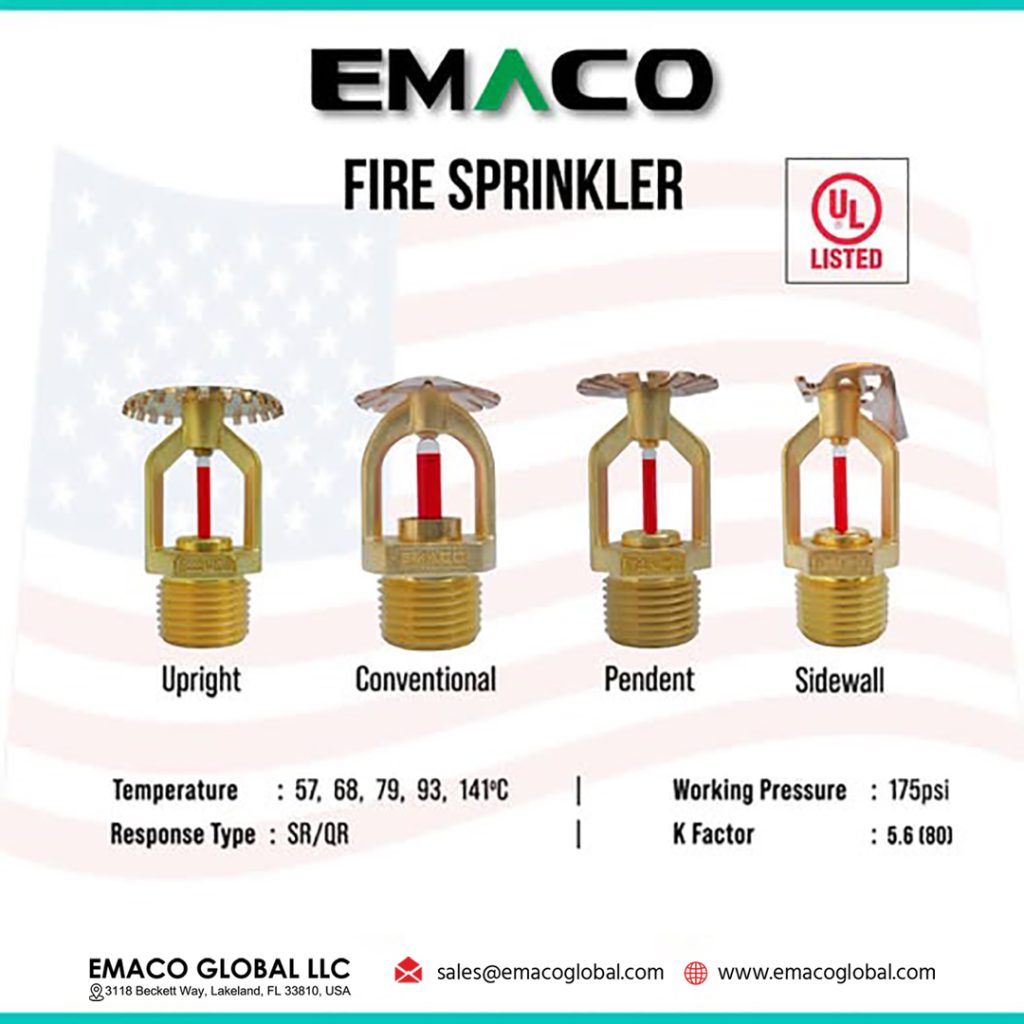
- EMACO Sprinklers and Nozzles: A broad line of sprinkler heads and spray nozzles (upright, pendent, sidewall, high/medium velocity fixed spray). These products cover general warehouse sprinkler needs and can complement a hydrant system by ensuring any sprinkler activation is maximally effective.
- EMACO Clean Agent Suppression System: A clean agent fire suppression solution (HFC-227ea) for protecting sensitive areas. As noted, these systems discharge gas to quickly put out fires without harming electronic equipment or stored goods.
Using equipment from the same provider can simplify installation and support. For instance, EMACO’s Clean Agent Suppression System is listed to NFPA 2001 and ready for areas where water poses risks. Integrating these solutions into the overall fire plan gives warehouses robust, coordinated protection.
Fire protection in large warehouses must be multi-layered. While automatic fire sprinkler systems handle many fires quickly, a fire hydrant system is indispensable for ultimate coverage and firefighter support. Warehouses that invest in both – along with specialized water spray and clean agent systems where needed – achieve the highest safety and compliance standards.
Contact EMACO GLOBAL today to discuss a comprehensive fire protection solution for your facility. Our range includes everything from reliable hydrant hoses and standpipes to advanced clean agent systems. Don’t leave your assets or people at risk – explore EMACO’s products above and reach out for a tailored consultation.
Frequently Asked Questions
- What is a fire hydrant system, and why do warehouses need it?
A fire hydrant system is a network of pipes, valves, hoses, and hydrants designed to supply large volumes of water for firefighting. Warehouses need it because of their size and fire load; hydrant systems provide the high flow and flexibility firefighters require to reach any part of a large building. They complement sprinklers by ensuring an ample and accessible water supply throughout the facility. - How does a fire hydrant system differ from an automatic fire sprinkler system?
An automatic sprinkler system is passive and suppresses fires by spraying water when heat activates sprinkler heads. A fire hydrant system is active in that firefighters manually use hoses connected to hydrants/standpipes to fight fires. Sprinklers quickly tackle small fires; hydrants sustain larger fires. Together, they provide overlapping protection. - What is a fixed water spray system, and when is it used in warehouses?
A water spray fixed system (per NFPA 15) uses high-pressure nozzles to spray water over specific hazard areas. It is used for flammable-liquid hazards or equipment like tanks, compressors, or transformer stations within a warehouse. These systems deliver a broad spray to cool and contain fires that ordinary sprinklers may not handle. - How does a clean agent extinguishing system work, and where is it applicable?
A clean agent extinguishing system floods an enclosed space with a gas (e.g., HFC-227ea, Novec 1230) upon fire detection. The gas either cools the fire or disrupts its chemical chain reaction without using water. It’s ideal for areas with sensitive equipment (server rooms, archives) because it extinguishes fires without damaging electronics or inventory. - What are the key components of a fire hydrant system?
Components include a reliable water source (tank or reservoir), fire pump(s), standpipe risers, landing valves, fire hoses and reels, branch pipes and nozzles, and control valves (gate valves, test/drain valves, etc.). Essentially, it has all the parts needed to deliver pressurized water: pumps, piping, hoses, and outlets. - Are fire hydrant systems required by code in warehouses?
Often yes. Many building and fire codes mandate standpipe/hydrant systems in large buildings or certain occupancy types. For example, a high-piled storage warehouse usually must have Class I standpipes on each floor. Even if not required by local code, insurers may require one. It’s best to consult local regulations (often based on NFPA standards). - How often should a fire hydrant system be inspected or maintained?
At a minimum: monthly checks of accessible components, annual full inspections, and periodic testing. NFPA 25 (the water-based systems maintenance standard) calls for at least annual visual inspections of hose valves/hydrants and annual flow tests. Fire hoses should be pressure-tested every 3–5 years. Pumps require weekly or monthly test runs. Always follow NFPA 25 and manufacturer guidelines. - Can EMACO products be integrated into existing fire protection systems?
Yes. EMACO’s offerings (hydrant hoses, valves, sprinklers, etc.) are UL/FM-approved and NFPA-compliant. They can usually replace or add to an existing system. For example, upgrading to EMACO’s pressure-restricting valves or hose reels can modernize an older installation. Contact EMACO for specific retrofit advice. - How do clean agent extinguishing systems protect sensitive equipment?
Clean agents extinguish fire without water or residues. According to EMACO, these systems “minimize the damage” to assets and allow businesses to resume operations quickly. The agent displaces oxygen or absorbs heat to put out the fire, leaving the electronics and materials unharmed. They’re ideal for data centers, telecommunication hubs, and anywhere water could be catastrophic. - What benefits do water spray fixed systems provide in high-risk industrial settings?
Water spray systems deliver a large volume of water quickly to deal with intense fires (like fuel or chemical fires). They protect machinery and racks by cooling and diluting fires, supplementing hydrants and sprinklers. The benefit is fast, high-energy suppression exactly where needed.
 based in USA, provides full spectrum of fire safety and security products and solutions for industrial, commercial and large residential premises. Each premise is unique and we design solutions that best fit in the market and cater to all present and future needs.